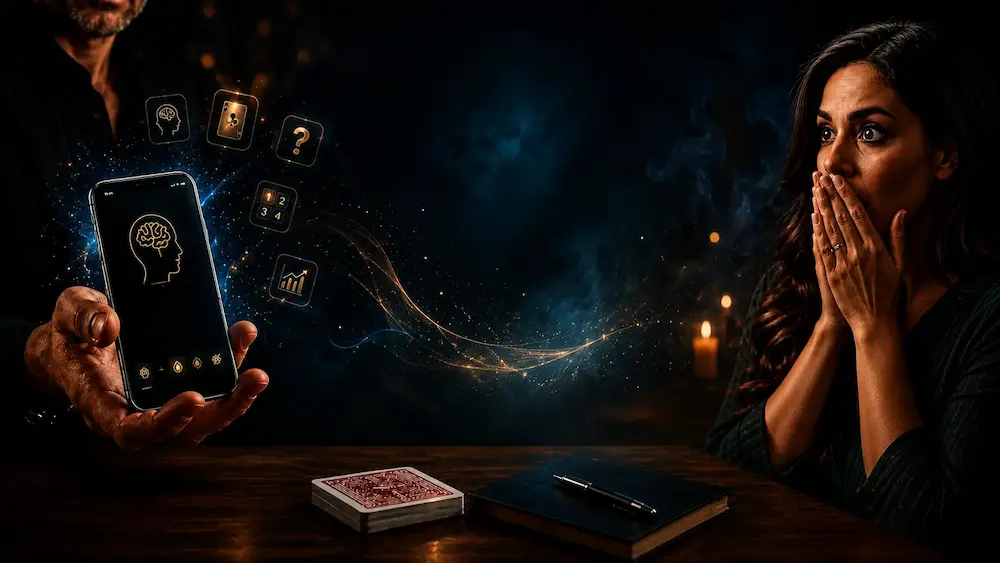
Mentalism has evolved significantly over the past decade, and one of the biggest changes has come from an unexpected source: smartphones. What was once considered a distraction has become a powerful performance tool, allowing mentalists to create astonishing demonstrations of mind reading in a way that feels completely natural.
Today, magic apps have become an essential part of modern mentalism, helping performers blend technology with psychology to deliver stronger and more memorable experiences.
Why Magic Apps Are So Effective
The success of magic apps lies in one simple fact: everyone uses a smartphone. Unlike traditional props, a phone doesn’t attract attention because it’s already part of everyday life.
Whether checking a calculator, opening a note, or browsing photos, spectators see these actions as completely normal. This familiarity allows mentalists to perform incredible effects without introducing suspicious-looking equipment.
The technology fades into the background, leaving the audience focused on the impossible.
Expanding the Possibilities of Mentalism
Magic apps allow performers to create routines that would be difficult—or even impossible—using traditional methods alone.
Many professional apps make it possible to reveal a thought-of word, predict a freely chosen number, or create interactive experiences that feel spontaneous and impossible to explain.
Rather than replacing classic techniques, these digital tools complement existing methods and encourage greater creativity.
A Natural Fit for Modern Audiences
Today’s audiences are comfortable with technology, making smartphones an ideal performance accessory. Because people rely on their phones every day, they rarely question their presence during a magic performance.
This creates a more authentic experience and often leads to stronger reactions, as spectators believe they’re interacting with an ordinary device rather than a specially prepared prop.
The Growing Popularity of Magic Apps Among Professionals
The increasing popularity of magic apps is not limited to hobbyists. Many full-time mentalists and professional magicians now include digital tools in their live shows, corporate events, and close-up performances. The reason is simple: when used correctly, a smartphone can become one of the most convincing props available. Unlike traditional gimmicks, it feels completely ordinary, allowing performers to create stronger moments of disbelief. Developers also continue to release innovative applications that push the boundaries of what is possible, giving professionals new ways to surprise audiences while keeping their performances fresh and engaging.
Enhancing the Audience Experience
One of the greatest advantages of magic apps is the way they increase audience engagement. Modern spectators enjoy interactive performances where they can actively participate instead of simply watching from a distance. By allowing spectators to use their own smartphones or make seemingly free choices throughout a routine, mentalists create a stronger sense of fairness and authenticity. This level of participation makes the final revelation even more impactful, as the audience feels personally involved in the impossible moment. In many cases, these memorable experiences are what people continue talking about long after the performance has ended.
Technology Is Only Part of the Secret
Despite their popularity, magic apps are not a shortcut to great mentalism. A successful performance still depends on presentation, timing, audience management, and storytelling.
The best performers use technology to enhance the illusion—not to become the focus of it. If spectators remember the mystery rather than the app itself, the performance has achieved its goal.
The Future of Digital Mentalism
As technology continues to evolve, magic apps will likely become even more sophisticated, incorporating innovations such as artificial intelligence and augmented reality.
However, the purpose of these tools will remain the same: helping performers create unforgettable moments of wonder.
Modern mentalism is still built on psychology, creativity, and human connection. Magic apps simply provide new ways to express those timeless principles.
Conclusion
Magic apps have transformed modern mentalism by making performances more natural, interactive, and adaptable to today’s digital lifestyle. They allow performers to integrate technology seamlessly into their routines while maintaining the core principles of psychological illusion and storytelling.
As both professional mentalists and modern audiences continue to embrace smartphones in everyday life, these tools have become a powerful bridge between traditional performance and digital innovation. Used correctly, they enhance creativity, increase audience engagement, and create stronger emotional reactions without ever distracting from the mystery itself.
However, the real power of mentalism still lies in the performer, not the technology. Magic apps are simply tools—what makes the experience unforgettable is how they are presented, structured, and performed.
In the end, modern mentalism is not about replacing tradition with technology, but about combining both to create deeper, more impactful moments of wonder. As the art continues to evolve, magic apps will remain a key part of its future, helping performers turn ordinary smartphone interactions into impossible experiences.